NEW Route 66 Turns 100: The Remaining Centennial Events Across America
A coast-to-coast guide to the concerts, car celebrations, art shows, community festivals, history talks, races and holiday events still ahead.
Reported Feature · United States
A working archive of arguments, observations, defenses, overreactions, useful nonsense, and productive side quests. A field guide to confusing human experience, part reference manual, part cultural criticism, part practical navigation system. Literary field notes from the messy middle, filed by someone who absolutely noticed the weird part and took it seriously enough to be useful, but never so seriously that the whole thing starts to feel like a clinic.
A coast-to-coast guide to the concerts, car celebrations, art shows, community festivals, history talks, races and holiday events still ahead.
Reported Feature · United States
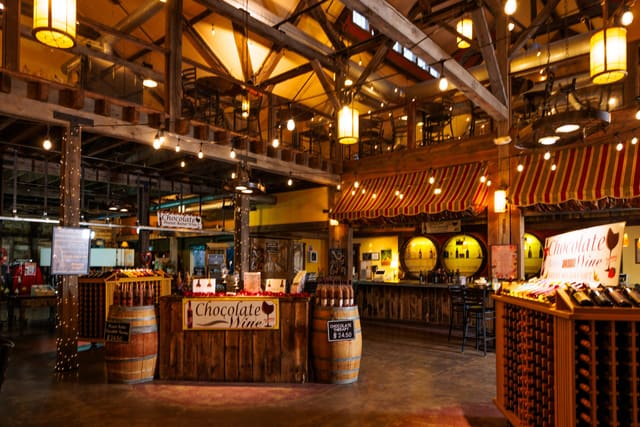
From an autumn finale and fireworks over the vines to holiday concerts, interactive mysteries and hands-on workshops, here is what is currently on Laurita’s special-event calendar through December.
Reported Feature · Laurita Winery · New Egypt, New Jersey
The third annual gathering at Bell Works offers a chance to taste New Jersey wines, meet the people making them and plan a future trip through the state’s wine country.
Event · Bell Works · Holmdel, New Jersey
Not every feeling needs to arrive with visible evidence.
8 min read
On Clerks, Office Space, and the life-changing things that arrive sideways
5 min read
Twelve questions, four result tiers, and the distinction between needing a reset and a pattern that keeps closeness permanently out of reach.
12 min read
Short margin notes on lyrics, lines, and the feelings they unlock.
Most writing does not begin with revelation. It begins with a sentence you are not sure about.
The brutal thing about fear is that it can feel protective while it is quietly shrinking the room.
The song is not arguing for sloppiness. It is arguing for evidence of life.
It does not present insecurity as delicate or poetic. It presents it as mechanical failure.
Writing can interrupt that. Not solve it, because that would be too neat and clean. Just interrupt it.
Pain is not proof that truth was the wrong choice. It is often proof that the truth finally reached the part of you that had been protected from it.
Good writing should not feel like someone assembled it from spare parts in a clean office. It should have some heat on it.
That is the ballpark experience in one diagnosis.
Somewhere in that beautiful collision, My Chemical Romance puts jazz hands and Batman in the same breath.
The Black Parade, and the refusal to sand ourselves down into something easier to explain.
On Harvey Danger's overlit opening rush, the boredom line as parenting philosophy, and the day a family phrase came back from the next generation.
On the strange mercy of a song that names the feeling of being fully present and still feeling like an accidental guest in your own life.
On a song that looks backward instead of forward, and the quieter kind of hype that comes from recognizing the person who took the road.
On hearing momentum in Paperback Writer, swapping genres into the title, and becoming a writer by saying the word before the evidence arrived.
On hearing refusal stripped to its load-bearing words, and recognizing the ProbleMattic presence that asks who built the rule before mistaking it for gravity.
On the songs that lend us stronger material for three minutes at a time.
On Taylor Swift, literary resurrection, and the craft of becoming harder to erase.
On The Big Bang Theory, too much noticing, and the two-word confession that names the weather inside.
Baseball essays on judgment, body language, leadership, pressure, crowd behavior, ballpark rituals, and public joy. Dispatches primarily inspired by the Somerset Patriots, Double-A affiliate of the New York Yankees. Go Mets!
On the people who make a ballpark feel like a place worth returning to.
On the unofficial line, the visible crowd, and the small courage of paying attention.
On minor league baseball as one of the last public experiences where a family can still buy a whole evening instead of a transaction.
On the small civic universe that appears between outs: mascot races, birthday announcements, T-shirt cannons, confidently executed dance moves, and an emcee holding the whole thing together with a microphone.
On the baseball purist, the Chatters, the mascot loyalists, and everyone who came for a whole evening instead of one correct reason.
On pitch selection, productive outs, obvious bunts, and the kind of patience that still moves the runner.
On readiness, the trip to the mound, fanny swats, and the small signals that tell you a decision has already been made before the crowd sees it.
On public joy, nonverbal fluency, and the hidden work of keeping an entire ballpark in the game.
On a 3-0 count, a confident prediction, a Spencer Jones home run, and the rare pleasure of being corrected by something better than expected.
On the acoustic intelligence of a ballpark, the crack, the thwap, the silence, and what you hear when you close your eyes for a minute.
On the Somerset Patriots as a master class in simple marks, local identity, and the rare alternate brand that makes people want the merchandise before the game begins.
On revising old loyalties without abandoning them.
On spending locally at the ballpark, and knowing where the dollar goes after the seventh inning.
On ESPN, Jersey Diners, and the kind of minor league magic that lasts.
On check-swings, a dramatic fist, and what it means when recognition arrives before the name of the play.
On Faith, Meaning, Mortality, Belonging, and Why We Keep Returning
Short essays from the domestic fringe, the kind of thing you have to stare at to truly notice.
On reusable bags, domestic folklore, and the gap between the person we imagine ourselves becoming and the person who forgot the bags again.
On version folklore, ghost assets, and the folder where organizations store their optimism.
On fifteen-minute meetings that become excavations, and why the truth waits for a calendar invite.
On pre-alignment, recursive calendars, and the simple sentence buried under choreography.
On automated certainty and unpaid patience.
On stale databases, verification anxiety, and the tiny butler that remembers too much.
On cloud metaphors, rented basements, and the infrastructure we pretend not to see.
On textile waystations, the middle category of laundry, and the domestic landform that grows when fantasy self loses the negotiation.
On borrowed cables, fake chargers, and the charging doctrine every home eventually needs.
On pattern recognition punished as negativity, practical questions dismissed as attitude, and the mop holder blamed for the leak.
On dominance problems, fairness speeches, and the second bucket five feet down the fence.
On queue citizenship, bravery reconsideration, and the culture that forms before the gate opens.
On ticket math, the sacred wall of unreachable plush, and disappointment management under fluorescent lights.
On Zoltar lines, stolen futures, and the hunger that makes uncertainty theatrical.
On frog technique, dart confidence, Candy Wheel Oracles, and the inherited maps of carnival economics.
On playground briefings, real confidence, and the life rule of not panicking while the situation is still small.
On phone privileges, ball python diplomacy, sibling theater, and becoming capable while afraid.
On restaurant doctrine, "not yet," and boundaries with gates instead of walls.
On the messy middle where ordinary life reveals its architecture, and the permission slip to let small things matter.
On the Uncrustable's crimped border, convenience theater, and the sandwich that solved crust by inventing a worse one.
On the split second between the flash and the boom, provisional bravery at fireworks shows, and what to do once the sound catches up.
On the invisible cost of preventable workplace friction, casual disregard, and the maturity tax paid by people who keep naming reality.
On refusing transformational insight, leaving observations at their actual size, and calling things as they are before the polite language gets there first.
On listening to the universe, accepting its strange deliveries, and admitting that after enough noticing, the line between observer and nonsense disappears.
On homemade Uncrustables as content infrastructure, the shortcut that became the standard, and why a PB&J does not need a tutorial ecosystem.
On Internet Crust: the manufactured difficulty wrapped around simple tasks so the internet can sell expertise for things nobody forgot how to do.
On the same word, but different cargo, and how two people can nod at each other while carrying entirely different instructions.
Congratulations, We Found a Sustainable Use for the Waste We Manufactured
On the Dead Internet Theory, Real Questions, and the Hollow Answers Waiting for Them
On the Moment the Instructions Run Out
On Trust, Fussiness, and the Point Where Better Stops Being Better
On restraint as craft.
On Pumpkin Spice, Halloween Stores, and the Calendar Police
On enthusiasm, taste, and the strange prestige of being unimpressed
On Clerks, Office Space, and the life-changing things that arrive sideways
Field notes from the messy middle.
On wavers, cart philosophers, spot vultures, and the behavioral laboratory with painted lines.
On recital fees, captive audiences, memory surcharges, and hometown hypercapitalism in tap shoes.
On Gen X childhood mythology, the streetlight rule, the fear machine, hollowed-out neighborhoods, and why watchfulness is not softness.
Arguments in favor of individuals, subjects, and unfairly maligned things.
Experiments in what we name things, and what the label does to the thing once it sticks.
They are inspections of the words we use to describe one another.
A controlled disassembly of the words we use to explain each other before we have finished observing each other.
A controlled look at the words we use when disagreement stops being about what happened and starts becoming a verdict about who someone is.
A controlled test of the words we use when one behavior, preference, or vibe gets promoted into a whole person.
A controlled review of the labels that turn ordinary people into recurring online archetypes.
A thoughtful inspection of the words people use when uncertainty, attraction, avoidance, hope, status, and poor texting habits all get promoted into categories.
A considerate inspection of the words organizations use when performance, pressure, personality, politics, and survival all get compressed into HR-friendly nouns.
A balanced inspection of the words we use when growth, healing, ambition, peace, and personal reinvention all get packaged as instructions.
A brief look at the words we use when taste, politics, morality, tone, status, sincerity, and ordinary irritation all become judgments about the person.
A controlled inspection of the labels we use when parenting styles, family roles, distance, loyalty, inheritance, and old history all get compressed into one tidy explanation.
A controlled inspection of the words we use when affection, loyalty, access, reciprocity, history, and exhaustion all get asked to explain what a friend is supposed to be.
A controlled inspection of the words that turn one behavior into a whole identity - and often reverse meaning depending on who benefits from it.
Short pieces that crack open a single human behavior and look at what is actually driving it.
What behavioral crackers have been crumbled into the bowl, and at what point does the soup become a diagnosis?
On the difference between noticing an opening and harvesting vulnerability, and why clean opportunism is awareness with motion.
Being a man and performing manhood are not always the same job.
The word has become so useful that it is in danger of becoming meaningless.
Disagreeing with your recollection is not automatically a campaign against reality.
It is a verdict. The useful work begins when we ask what actually happened.
A rule tells you what you must do. A boundary tells you what I will do. Those are not the same sentence.
Some are painful. Some are frightening. Some reorganize the way a person experiences safety. We should have enough words to tell the difference.
Being triggered is something more specific.
What happens when you slow the relationship down usually tells you more.
Three hours without a text does not automatically require the attachment tribunal.
From Open-Seat Takers to Afterglow Borrowers: twelve common species, and what happens to the opportunity after each one touches it.
No, not inherently. The word sounds guilty before the facts arrive; the real test is whether you noticed an opening or somebody else's exposed edge.
On fake ease, hidden preferences, and the invisible labor that keeps allegedly low-maintenance people comfortable.
On busy as status, martyrdom branding, and the difference between real exhaustion and the performance that borrows its credibility.
On scar tissue formatted as communication, and why the room remembers gaps more aggressively than effort.
On slow-moving terror, invisible courage, and muttering the same phrase under your breath for six minutes while the twins have their ride.
On disguised urgency, the politeness tax, and why clarity beats a soft blanket over the ask.
On atmospheric meetings, unpaid meteorologists, and the action item still one sentence long.
Every close friendship eventually becomes a language problem.
It is measured by how much the surrounding environment has to reorganize itself around the behavior.
Not every feeling needs to arrive with visible evidence.
The Bureau of Fine Lines is the umbrella organization devoted to distinctions nobody asked it to formally investigate. The Department of Questionable Assessment administers the tests, assigns the deeply unofficial scoring ranges, and insists the instrument is “more useful than nothing.” The Institute for Extremely Informal Research receives the Department’s generous funding and conducts rigorous studies consisting primarily of noticing things, asking better questions, and occasionally making a chart nobody requested.
Twelve questions, four result tiers, and the pattern that separates a person who notices an opening from one who notices exposure.
Twelve questions, four result tiers, and the distinction between a bad Tuesday and a system that has begun reorganizing itself.
Twelve questions, four result tiers, and the distinction between present-tense annoyance and a reaction borrowing voltage from somewhere else.
Twelve questions, four result tiers, and the distinction between two people remembering Tuesday differently and a pattern that makes your memory the problem.
Twelve questions, four result tiers, and the distinction between a preference you do not share and a behavior that predicts harm.
Twelve questions, four result tiers, and the distinction between putting off a task and refusing a job that should not have been accepted.
Twelve questions, four result tiers, and the distinction between genuine enthusiasm and affection used as a control mechanism.
Twelve questions, four result tiers, and the distinction between protecting your own side of the street and issuing a threat dressed as self-care.
Twelve questions, four result tiers, and the distinction between needing a reset and a pattern that keeps closeness permanently out of reach.
Twelve questions, four result tiers, and the distinction between keeping score and keeping a lesson that still needs to be used.
Twelve questions, four result tiers, and the distinction between useful deliberation and a loop that never reaches a decision.
Twelve questions, four result tiers, and the distinction between a brutal stretch and a depletion that rest no longer repairs.
Twelve questions, four result tiers, and the distinction between being considerate and disappearing yourself to keep the room comfortable.
Twelve questions, four result tiers, and the distinction between finishing a chapter and requesting a retrial because the ending still stings.
Twelve questions, four result tiers, and the distinction between a strategic pass and a habit that makes necessary fights permanently unavailable.